Category: DEALER HUB

Professional resources for global dealers, including logistics optimization, sourcing strategies, and import regulations.

  • Navigating the Maze: A Guide to Global Import Regulations and Safety Certifications

    1. Why Compliance is Your Best Competitive Advantage

    For international dealers, importing agricultural machinery isn’t just about the price—it’s about compliance. Bringing non-certified equipment into your country can lead to heavy fines, customs seizure, or liability issues. Understanding global standards is the first step toward a secure and profitable business.

    “In international trade, certificates are not just paperwork—they are the legal passport for your business growth.”

    2. European Market: The CE Marking (2006/42/EC)

    If you are importing into Europe, the CE Marking is non-negotiable.

    • What it covers: It ensures the machinery meets essential health and safety requirements.
    • The Dealer’s Role: Always verify the “EC Declaration of Conformity” provided by the manufacturer. This document is the legal passport for your implements in the EU.

    3. North America: ANSI and ASABE Standards

    The North American market relies heavily on standards set by the ASABE (American Society of Agricultural and Biological Engineers).

    • Safety Shields: Specific regulations regarding PTO (Power Take-Off) shielding and safety decals are strictly enforced.
    • Lighting & Marking: Ensuring that slow-moving vehicle (SMV) signs and lighting kits comply with local road laws is crucial for resale.

    4. Australia & New Zealand: Quarantine and Structural Safety

    Oceania has some of the world’s strictest biosecurity and safety laws.

    • Bio-Security: Implements must be free of soil and organic matter before shipment to pass strict quarantine inspections.
    • WHS Compliance: Structural integrity and “Roll-Over Protective Structures” (ROPS) must meet specific local workplace health and safety guidelines.

    Check our [Smart Packing Strategies] to save on your next shipment.

    Conclusion

    At Oratexca, we don’t just source machinery; we vet every manufacturer’s compliance status. Navigating these regulations can be complex, but with the right partner, it becomes a streamlined process that protects your investment and your customers.
  • Shipping More for Less: Smart Packing Strategies to Slash Your Logistics Costs

    1. The Hidden Cost of “Empty Space”

    In the world of international shipping, you don’t just pay for weight; you pay for volume. Especially for heavy-duty tractor implements, shipping “air” inside a container is one of the biggest hidden drains on a dealer’s profit margin. To maximize your ROI, you must look beyond the unit price and focus on Loading Efficiency.

    “Logistics optimization is as important as the quality of the machine itself. Saving space is saving profit.”

    2. SKD (Semi-Knocked Down) Strategy

    Many dealers avoid assembly, but the math is simple: Shipping fully assembled implements often triples your logistics cost.

    • The Benefit: By shipping in SKD format, you can fit up to 3 times more units in a 40ft High Cube container.
    • The Key: Proper SKD requires clear assembly manuals and standardized components to ensure your local technicians can reassemble them quickly.
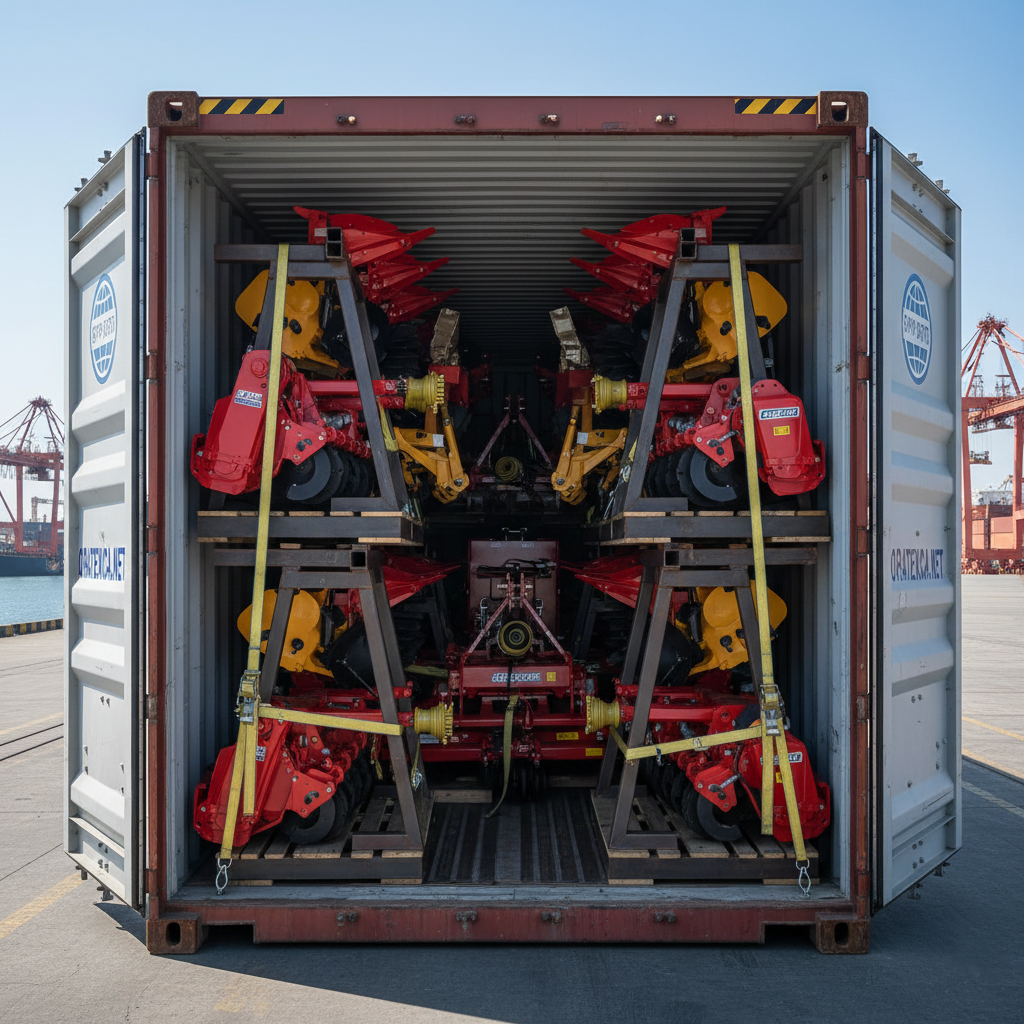
    Efficient container loading for tractor implements - Oratexca

    3. The “Nesting” Technique

    For implements with irregular shapes, like plow blades or buckets, we utilize a technique called Nesting.

    • How it works: Smaller implements are nested inside larger ones, or components are stacked to minimize the total height.
    • Safety First: Professional nesting always includes heavy-duty steel framing and tension straps to prevent shifting and damage during sea transit.

    Learn more about our [Quality Standards for Korean Steel]

    4. Choosing the Right Container: 20ft vs. 40ft HC

    It’s not always about the bigger container.

    • 20ft Container: Best for high-density, heavy items where weight limits are reached before volume.
    • 40ft HC (High Cube): Essential for bulky implements where the extra 1 foot of height allows for double-stacking.

    Conclusion

    Optimizing your logistics is the fastest way to increase your competitiveness in the local market. By mastering these packing strategies, you are not just buying equipment; you are securing a sustainable supply chain.